About Alyce Wittenstein

Alyce Wittenstein is a world class attorney, blogger and filmmaker. She began working at the firm in 1985 as a managing paralegal, learning all the practices and procedures of the firm from Mr. Wittenstein and the staff. From 1995-1998, she attended CUNY Law School where she made a mark as a teaching assistant for Civil Rights leader Haywood Burns. She founded a Human Rights Delegation to Haiti and studied Constitutional Law with Supreme Court Justice Ruth Bader Ginsburg. Working at the Equal Opportunity Employment Commision (EEOC), she learned a great deal about Employment Discrimination matters. She brought her knowledge of the Personal Injury practice and her passion for Civil Rights to the firm when she was admitted to the Bar in 1999. In 2000, she became a partner and the firm name was changed to Wittenstein & Wittenstein, Esqs. PC.

Executive Order – East Wing Restoration (Speculative)

SUMMARY

January 20, 2029

President Orders Removal of Unauthorized State Ballroom and Restoration of the White House East Wing

Today, the President signed an Executive Order directing the complete demolition of the recently completed White House State Ballroom and the reconstruction of the historic East Wing. The order restores essential presidential, public, and security functions eliminated by the East Wing’s demolition and affirms that the White House is a national trust held for institutional continuity—not personal legacy.

© 2025 Alyce Wittenstein. All Rights Reserved.

Project 2029 and all associated text, structure, and policy formulations are original copyrighted works. No portion may be reproduced, adapted, translated, or distributed without express written permission, except for brief quotations with attribution.

PRESS RELEASE

WASHINGTON — The President today signed an Executive Order mandating the removal of the newly completed White House State Ballroom and the full restoration of the White House East Wing to its historic footprint and function.

The East Wing, first constructed in 1902 and expanded in 1942, served as the White House’s public and operational front. It housed the Office of the First Lady and staff, the President’s theater, the primary visitor entrance and tour circulation, offices for Legislative Affairs and the White House Military Office, and the East Colonnade connecting to the Executive Residence. Beneath the East Wing, secure continuity-of-government infrastructure has long supported presidential operations.

In October 2025, the East Wing was demolished to construct a large State Ballroom. Although construction has since been completed, the President determined that the structure permanently displaced core institutional functions and materially altered the historic character of the White House complex.

The Executive Order declares the State Ballroom an unauthorized permanent structure, prohibits its use or maintenance, and directs its complete demolition. No portion of the structure will be retained or repurposed.

Following demolition, the Order directs the General Services Administration to reconstruct the East Wing as a historically accurate and functionally equivalent structure based on authenticated architectural records, restoring offices, circulation spaces, visitor access, and exterior massing. Security and continuity-of-government capabilities will be preserved throughout the process.

The Order establishes independent historic oversight and affirms that no future permanent structural changes to the White House may occur without express congressional authorization.

FULL EXECUTIVE ORDER

REMOVAL OF THE UNAUTHORIZED WHITE HOUSE STATE BALLROOM AND RESTORATION OF THE EAST WING

By the authority vested in me as President of the United States by the Constitution and the laws of the United States of America, it is hereby ordered as follows:

Section 1. Purpose and Findings

The White House is a national historic landmark, a secure federal workplace, and a public trust held for the American people. Its permanent structures must serve institutional, constitutional, and operational purposes rather than private legacy.

The White House East Wing, constructed in 1902 and expanded in 1942, historically housed essential functions including:
the Office of the First Lady;
the President’s theater;
the primary public entrance for White House visitors;
the East Colonnade connecting to the Executive Residence;
offices of the White House Military Office and Office of Legislative Affairs;
and secure continuity-of-government infrastructure located beneath the East Wing.

In October 2025, the East Wing was demolished and replaced with a newly constructed State Ballroom. That structure eliminated core operational, public-access, and institutional functions of the East Wing and materially altered the historic footprint of the White House complex.

Completion of construction does not confer legitimacy on a structure that undermines constitutional stewardship of the White House.

It is therefore the policy of the United States to remove the unauthorized State Ballroom and restore the East Wing to its historic and functional configuration.

Section 2. Declaration of Unauthorized Structure

The State Ballroom constructed on the site of the former East Wing is hereby declared an unauthorized permanent structure.

No federal funds shall be expended for its operation, maintenance, programming, or ceremonial use beyond actions necessary to ensure safety pending removal.

Section 3. Demolition Order

The Administrator of General Services, in consultation with the National Park Service, the United States Secret Service, and the Advisory Council on Historic Preservation, shall:

(a) Develop and execute a plan for the complete demolition and removal of the State Ballroom;
(b) Ensure demolition is conducted in a manner that protects adjacent historic structures, grounds, and classified subterranean facilities;
(c) Complete demolition as expeditiously as practicable consistent with safety, security, and preservation standards.

No portion of the State Ballroom shall be retained, repurposed, or incorporated into future construction.

Section 4. Reconstruction of the East Wing

Following demolition, the Administrator of General Services shall reconstruct the White House East Wing as a historically accurate and functionally equivalent structure consistent with its documented pre-demolition configuration.

Reconstruction shall include, at a minimum:

(a) Offices for the First Lady and associated staff;
(b) The President’s theater;
(c) The primary visitor entrance and tour circulation spaces;
(d) Restoration of the East Colonnade connecting to the Executive Residence;
(e) Office space for the White House Military Office and Office of Legislative Affairs;
(f) Exterior massing, materials, and rooflines consistent with the historic East Wing.

Section 5. Security and Continuity Functions

Nothing in this Order shall be construed to impair, disclose, or diminish secure continuity-of-government facilities or capabilities located beneath the East Wing site.

The Secretary of Homeland Security and the Director of the United States Secret Service shall certify, prior to demolition and upon completion of reconstruction, that all security and emergency-response functions are preserved or enhanced.

Section 6. Oversight and Future Limitations

An Independent East Wing Restoration Oversight Panel shall be appointed within 30 days of this Order.

No future permanent structural addition to the White House complex shall occur absent express congressional authorization and compliance with federal historic preservation law.

Section 7. Effective Date

This Order is effective immediately and shall be implemented consistent with applicable law and appropriations

Executive Order – East Wing Restoration (Speculative)

Executive Order – Kennedy Center (Speculative)

SUMMARY

January 20, 2029

Today, the President signed an Executive Order restoring the John F. Kennedy Center for the Performing Arts to its lawful name, memorial status, and independent governance. The Order voids unauthorized renaming actions taken on December 18, 2025, reaffirms congressional intent, and restores the Center as a national cultural institution held in trust for the American people—not as a vehicle for personal or political legacy.


FULL EXECUTIVE ORDER TEXT

[PASTE YOUR FULL EO TEXT HERE — unchanged]


PRESS RELEASE

WASHINGTON — The President today signed an Executive Order restoring the John F. Kennedy Center for the Performing Arts to its proper legal name, memorial status, and governance structure.

The Kennedy Center was established by Congress as a living memorial to President John F. Kennedy and was never intended to serve as a platform for personal branding or political self-memorialization. Actions taken in December 2025 to rename the institution were undertaken without congressional authorization and contrary to the Center’s founding statute.

This Executive Order reaffirms that national cultural institutions are held in public trust and exist for the benefit of the American people—not for individual aggrandizement.


© 2025 Alyce Wittenstein. All Rights Reserved.
Project 2029™ and all associated text, structure, and policy formulations are original copyrighted works.


POST 2 — EXECUTIVE ORDER

Title

Executive Order: Removal of Unauthorized White House State Ballroom and Restoration of the East Wing

Category

Executive Orders
(Optional tag: Day One)


SUMMARY

January 20, 2029

Today, the President signed an Executive Order directing the removal of the unauthorized White House State Ballroom and the reconstruction of the historic East Wing. The Order restores essential presidential, public, and security functions eliminated by the East Wing’s demolition and affirms that the White House is a national trust held for institutional continuity—not personal legacy.


FULL EXECUTIVE ORDER TEXT

[PASTE YOUR FULL EO TEXT HERE — unchanged]


PRESS RELEASE

WASHINGTON — The President today signed an Executive Order mandating the removal of the recently completed White House State Ballroom and the full restoration of the White House East Wing to its historic footprint and function.

The East Wing, first constructed in 1902 and expanded in 1942, served as the White House’s public and operational front. It housed the Office of the First Lady, visitor access points, and essential security infrastructure. Its demolition disrupted both institutional continuity and public access.

This Order restores the White House as a working seat of government, not a monument to individual ambition.


© 2025 Alyce Wittenstein. All Rights Reserved.
Project 2029™ and all associated text, structure, and policy formulations are original copyrighted works.


POST 3 — EXECUTIVE ORDER

Title

Executive Order: January 6 Accountability and Public Record Framework

Category

Executive Orders
(Optional tag: Day One)


SUMMARY

January 20, 2029

Today, the President signed an Executive Order establishing a January 6 Accountability and Public Record Framework. The Order affirms that presidential pardons do not erase historical fact, restores public access to accurate records of the January 6, 2021 attack, and directs federal agencies to preserve and disclose information necessary to uphold democratic accountability and the rule of law.


FULL EXECUTIVE ORDER TEXT

[PASTE YOUR FULL EO TEXT HERE — unchanged]


PRESS RELEASE

WASHINGTON — The President today signed an Executive Order establishing a comprehensive public accountability framework related to the January 6, 2021 attack on the United States Capitol.

While presidential pardons may affect criminal liability, they do not negate historical reality, civic responsibility, or the public’s right to an accurate record. This Order directs federal agencies to preserve, organize, and disclose factual information concerning January 6, ensuring transparency for the American people and future generations.

Democracy requires memory. This Order ensures it.

Executive Order – Kennedy Center (Speculative)

Introducing Project 2029

Project 2029 began as a deliberate shift in how I use imagination.

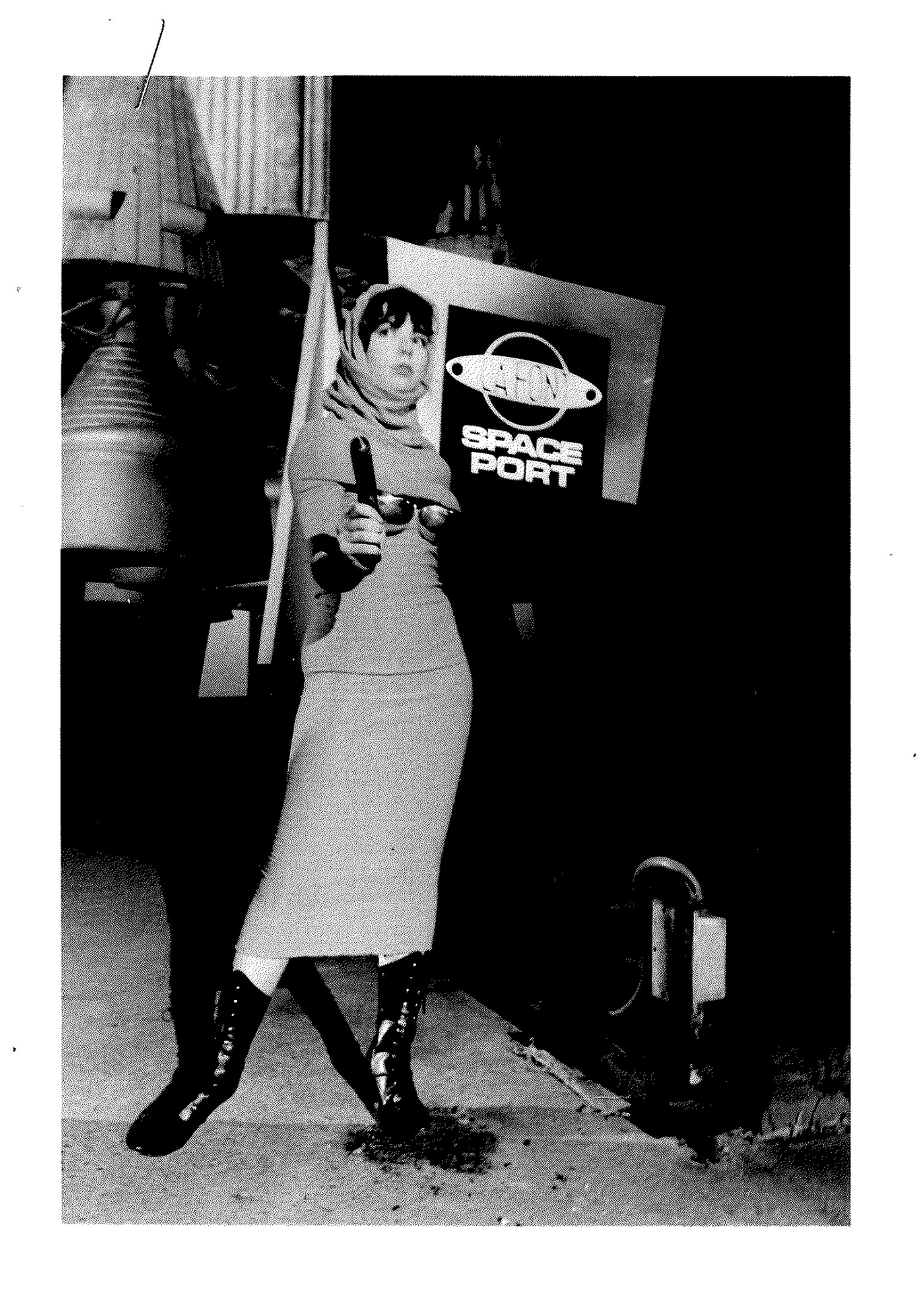
More than thirty-five years ago, I made dystopian films that imagined political and social futures shaped by fear, institutional failure, and concentration of power. At the time, those futures felt exaggerated—useful as warnings, but safely distant from reality. Over time, many of the conditions those films explored stopped feeling speculative and began to feel familiar.

That experience changed how I think about storytelling and political imagination. If dystopian futures can move from fiction into lived experience, then imagination is not neutral. It shapes what people expect, accept, and resign themselves to. Project 2029 is a conscious decision to move in the opposite direction—to use imagination not to warn, but to build.

Project 2029 is a speculative policy project built on a clear assumption: progressive Democrats win governing power in a decisive landslide and choose to govern decisively. The project does not argue for that outcome, respond to opponents, or engage in contemporary political debate. It begins after the election is over and the mandate is established.

From that starting point, Project 2029 asks a practical question: what policies could be enacted when a governing majority has a mandate and chooses to govern decisively?

The project unfolds through fictional executive orders, agency directives, policy initiatives, and proposed constitutional amendments. These documents are written in the language of real governance—procedural, specific, and institutional. They focus on systems rather than slogans: how policies are implemented, how benefits are administered, how rights are enforced, and how power is redistributed through law and regulation.

The policies imagined in Project 2029 address material conditions. They assume large-scale action on labor, healthcare, housing, education, climate infrastructure, childcare, antitrust enforcement, and democratic participation. In this world, ambition is not treated as reckless or aspirational. It is treated as ordinary.

One of the goals of Project 2029 is normalization. Many policy ideas that enjoy broad public support are still framed as unrealistic or politically dangerous. By presenting them as routine acts of governance—calmly, clearly, and without apology—the project invites readers to imagine these outcomes as achievable features of everyday political life.

Project 2029 is intentionally optimistic. That optimism is not sentimental; it is strategic. Political participation depends on belief that engagement matters. Project 2029 is designed to educate, to build familiarity with progressive policy ideas, and to help create the cultural conditions in which those ideas can become popular, legible, and worth turning out to vote for.

This blog will introduce Project 2029 documents as they are released and provide context for the assumptions and policy logic behind them. Together, they form a speculative but concrete blueprint for what governing with confidence could look like.

Project 2029 exists because imagination matters.
If dystopian futures can come true, so can better ones.

Read Project 2029

Introducing Project 2029

The Accident Was Minor. The Injury Was Not. Why Low-Impact Car Crashes Still Cause Serious Harm

People tend to describe car accidents using the language of property damage. The car wasn’t totaled. The bumper barely dented. The airbags didn’t deploy. Everyone walked away. And yet, weeks later, the pain arrives. This disconnect—between what a crash looked like and what it did—is one of the most common and most misunderstood issues in New York car accident cases. It is also one of the most aggressively exploited by insurance companies. In Queens, where traffic is dense, speeds are inconsistent, and collisions often occur in close quarters, many crashes fall into the category insurers like to call “minor impact.” The phrase sounds scientific. It isn’t. It’s a financial label, not a medical one.

Vehicle Damage Is Not a Medical Diagnosis

A car is engineered to absorb force. Crumple zones, reinforced frames, and plastic bumper covers are designed to disperse energy in ways that protect the vehicle’s occupants. Your spine, by contrast, is a delicate column of bones, discs, nerves, and soft tissue that is not designed for sudden acceleration and deceleration. In a low-speed rear-end collision, the body is propelled forward while the head lags behind for a fraction of a second. That fraction is enough. The neck snaps, muscles strain, ligaments stretch beyond their limits, and discs can shift or tear. None of this requires a dramatic crash. None of it requires a totaled vehicle. What it requires is force applied suddenly, without warning.

Why Pain Often Doesn’t Show Up Right Away

One of the most common things injured people say is, “I felt fine at first.” That statement is honest—and predictable. After a collision, adrenaline floods the system. Muscles tighten to stabilize the body. Inflammation builds gradually. The nervous system focuses on immediate survival, not pain signaling. Days later, stiffness appears. Then soreness. Then sharp pain radiating into the arms, shoulders, or lower back. Sleep becomes difficult. Turning the head hurts. Sitting too long hurts. Standing too long hurts. By the time someone seeks medical care, the insurance company has already decided the injury is “suspicious” because it wasn’t immediate. This is not because delayed pain is unusual. It is because delayed pain is inconvenient for insurers.

The Myth of “Minimal Impact”

Insurance adjusters routinely argue that a low-damage crash cannot cause a serious injury. They rely on photographs of intact bumpers and repair estimates that barely cross a few thousand dollars. What they do not rely on is medical literature. MRIs frequently reveal herniated discs, bulging discs, facet joint injuries, and nerve compression in people involved in so-called minor crashes. These findings are especially common in adults over forty, whose spines have less elasticity and less tolerance for sudden force. X-rays, which insurers love to point to, often show nothing. X-rays are excellent for fractures. They are nearly useless for disc injuries and soft-tissue damage. The absence of a broken bone does not mean the absence of injury. It simply means the injury is more complex.

Why These Cases Are Fought So Hard

Low-impact crash cases are not weak cases. They are inconvenient cases. They require careful medical documentation, patience, and a willingness to explain biomechanics to people who would rather talk about bumper covers. They cannot be rushed. They do not resolve neatly in a few weeks. And they often grow more serious over time, not less. For insurance companies, that makes them risky. The faster an insurer can get someone to accept a settlement—before MRIs are ordered, before treatment progresses, before surgery is even discussed—the cheaper the case becomes. That urgency is often disguised as generosity.

When “Soft Tissue” Isn’t Soft at All

The phrase “soft tissue injury” is another insurance favorite. It sounds minor. It sounds temporary. It sounds dismissible. In reality, muscles, ligaments, discs, and nerves are what allow us to move, work, sleep, and live without pain. Damage to these structures can last years or a lifetime. Chronic neck and back pain changes how people work, how they drive, how they care for their families, and how they age. Many clients only realize the seriousness of their injury when conservative treatment fails—when physical therapy plateaus, injections provide only temporary relief, or a spine specialist begins discussing surgical options. By then, the stakes are no longer abstract.

What Actually Matters in Low-Impact Injury Cases

These cases are not won with drama. They are won with credibility. Consistent medical care matters. Imaging matters. Clear timelines matter. So does restraint—knowing when not to speak to an insurance adjuster, when not to minimize symptoms, and when not to rush resolution simply to “be done with it.” The fact that a crash occurred at a low speed does not make an injury imaginary. It makes the case more technical. And technical cases require experience, not volume.

Trust Your Body, Not the Bumper

If your accident was described as “minor,” but your pain is persistent, worsening, or limiting your life, that disconnect deserves to be taken seriously. Cars are built to hide damage. Bodies are not.

The Accident Was Minor. The Injury Was Not. Why Low-Impact Car Crashes Still Cause Serious Harm