Art does not arrive fully formed. It is built—collectively, physically, in shared space. Before it appears on a street or in a march, it appears in conversation, in planning sessions, in rooms where people cut, paint, argue, revise, and keep going. This process is not secondary to the work. It is the work.
Community is strengthened not only by what art represents, but by how it is made. An art build gathers people who might not otherwise meet. It gives them a common task, a shared visual language, and a reason to stay in the room together long enough for trust to form. The result is more than objects. It is continuity.
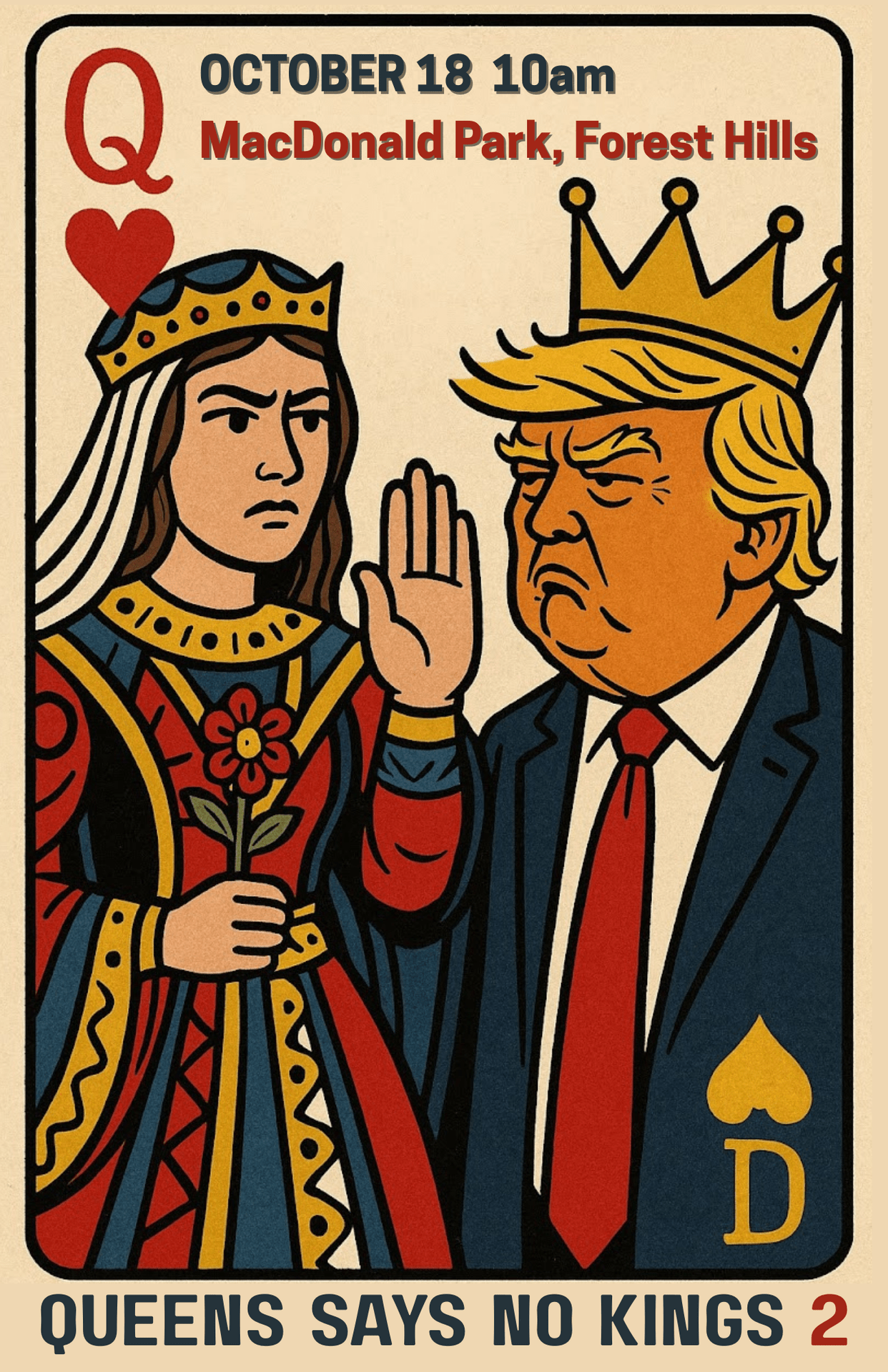
In preparation for the next No Kings march, a large-scale art build is underway—one that treats visual presence as essential, not decorative. Signs, symbols, and constructed forms are being developed with the understanding that they will be carried by many hands, seen from many distances, and read in motion. This kind of work demands clarity, durability, and collective authorship. It is designed to be used.
What happens in these builds matters beyond the march itself. People show up not as spectators but as participants. Skills are shared. Decisions are made together. The labor is visible. Art becomes a civic act—something that belongs to everyone involved, rather than something handed down fully resolved.
This is also how places become cultural centers: not through branding, but through sustained activity. Queens does not need permission to claim its place on the art map. It earns it every day through lived practice—through studios, community spaces, libraries, storefronts, and living rooms that function as sites of production. The work being made here is shaped by proximity, diversity, and immediacy. It is responsive because it has to be.
Brooklyn had its moment. Its mythology is now well documented, well marketed, and increasingly detached from daily life. Queens, by contrast, is not performing an identity. It is producing one. The art coming out of this borough is inseparable from the communities that make it—multilingual, intergenerational, and grounded in actual use rather than trend.
Preparing for a major art build is, in this sense, an act of cultural declaration. It says that the visual language of protest, care, and resistance is being authored here. That Queens is not a feeder system or a periphery, but a center—living, breathing, and in motion.
Art strengthens communities because it requires them. And when communities build together at scale, they don’t just make images. They make presence.